

Seattle City Councilmember Dan Strauss (District 6) announced six new pieces of legislation today, called the Vehicle Resident Assistance Program (VRAP), aimed at creating pathways to shelter and housing for people who live in their vehicles.
“One out of every four people experiencing unsheltered homelessness in our region is living in their vehicle. Right now, the City of Seattle does not have a comprehensive strategy to help them build pathways to shelter and housing. We also know that our city’s current approach to RVs is not working. This legislation is about ensuring people who live in vehicles are not forgotten — but that they’re cared for and have a clear road to housing,” said Councilmember Strauss.
The City of Seattle currently provides very few services specifically designed and dedicated to helping vehicle residents access support and build pathways to housing. This legislation would create new resources to help people who live in all types of vehicles, establish new resources and rules specific to motorhomes and travel trailers, and clarify the city’s existing junk vehicle law.
“Vehicle Resident Outreach (VRO) has been addressing the needs of vehicle residents since 2011, and the population and need keeps growing. There is far more need than outreach workers currently have capacity to address, and this legislation is a strong step in the right direction to provide the resources needed to help vehicle residents stay safe and legal while they’re in their vehicle, and move toward more stable situations,” said Jen Manlief, Vehicle Resident Programs Manager at VRO.
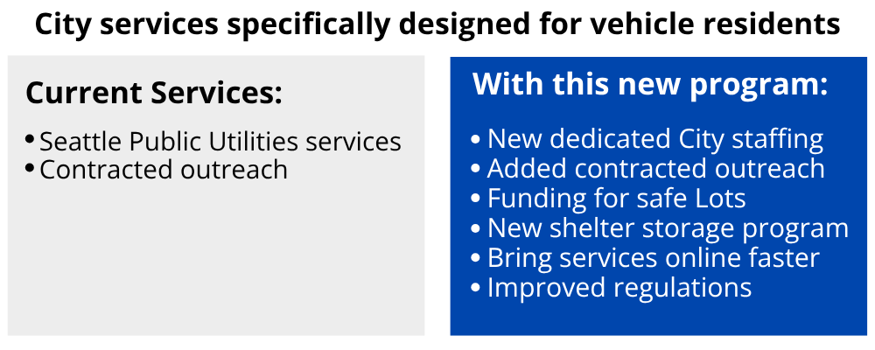
What the legislation would do?
The Vehicle Resident Assistance Program is a package of six pieces of legislation focused on expanding services and creating pathways to shelter and housing for people who live in their vehicles.
Here’s what each of those six pieces of legislation would do:
- Invests in new services: Directs $5 million of existing funding already in the City’s budget to increase services, such as safe lots, shelter storage, and direct outreach, and to create pathways to housing for vehicle residents.
- Creates ‘Shelter Storage’: Enables the city to create a new service that will help vehicle residents access existing shelter and housing by allowing the City of Seattle to store their vehicles when they come inside. This aims to change existing practices that often puts people’s vehicles, which are often their last possessions, at risk when they enter shelter or housing.
- Cuts red tape to open resources faster: Expands the authority of the Finance and Administrative Services director to sign leases and open safe lots, safe storage, and other resources faster for people who live in their vehicles.
- Better supports and regulates motorhomes: Establishes clearer rules and creates a pathway to shelter and housing for people who live in motorhomes and travel trailers on city streets. This mirrors similar legislation that has been put into action in other cities like San Francisco and Lacey.
- People in need who are engaged in services, follow existing laws, and comply with basic rules will receive a Vehicle Resident Assistant Permit allowing them to continue living in their motorhomes and travel trailers on city streets while they wait for appropriate shelter or housing.
- Motorhomes and travel trailers without a permit will be limited to parking on city streets for two hours at a time.
- Clarifies Seattle’s ‘junk vehicle’ law: Clarifies the City’s existing Junk Vehicle Law, which hasn’t been updated in 25 years, to better address vehicles that have been abandoned or inappropriately stored on Seattle’s streets and provides better guidance to parking enforcement.
- VRAP Resolution: The final piece of legislation is a resolution that outlines how these pieces of legislation will work together to better assist vehicle residents.
What’s next?
The VRAP legislative package will be discussed at the Public Safety Committee on Aug. 11 at 9:30 a.m. A vote on the legislation is anticipated in the Public Safety Committee in mid-September.
# # #