

MEDIA AVAILABILITY: Councilmember Strauss & Council President Hollingsworth will be available for interviews at 11 a.m. at Seattle City Hall. Please email jesse.franz@seattle.gov to coordinate.
Councilmember Dan Strauss (District 6) announced major affordability legislation today that would dramatically decrease utility costs for 31,000 low-income households. The legislation would expand eligibility for the city’s existing Utility Discount Program, which could save low-income families more than $1,000 per year depending on their usage.
“This is about making life more affordable for working families fast. Right now, a barista making just above the minimum wage is paying the same home utility rates as a millionaire hedge fund manager. This legislation will put money back into the pockets of working people who are struggling to get by and need help,” said Councilmember Strauss.
The legislation is co-sponsored by Council President Joy Hollingsworth. It would make low-income households that earn less than 60 percent of the area median income eligible for 60 percent discounts on Seattle City Light bills and 50 percent discounts on Seattle Public Utilities bills through the Utility Discount Program.
“So many people in Seattle are being squeezed as costs keep rising, and it is increasingly difficult for individuals and families to pay their utility bills. This legislation is an important step to helping people keep the lights on as we prepare for rate increases. I am grateful to Councilmember Strauss for his leadership on this important program,” said Council President Hollingsworth, chair of the Governance and Utilities Committee.
Who would qualify for lower utility costs?
One of the problems with the current Utility Discount Program is that eligibility is based on state median income, which is much lower than the area median income measure used by all other affordability programs. That means tens of thousands of low-income people who should qualify for the Utility Discount Program do not right now.
This legislation would correct that and ensure all households making less than 60 percent of the area median income receive the discount.
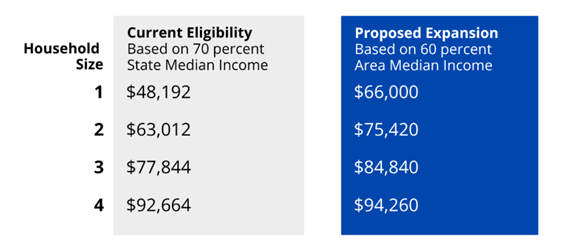
Of the 31,000 new households that would qualify for the Utility Discount Program, it is estimated that 8,800 are senior households, many which are rent burdened and on fixed incomes.
The expanded discount for low-income families would be paid for with a very minimal increase to rates, averaging just 50 cent per month for Seattle City Light customers and 27 cents per month for Seattle Public Utilities customers.
Other affordability improvements ahead
Councilmember Strauss has been working closely with Seattle City Light, Seattle Public Utilities, and the City Budget Office for more than a year on this proposal. In November, he sponsored a statement of legislative intent to look at additional improvements to both the Utility Discount Program and the Emergency Assistance Program, which helps households struggling to pay past-due bills.
From that work, the departments have proposed additional improvements, including:
- Expanding eligibility for the Emergency Assistance Program to all households making up to 80 percent area median income;
- Increasing participation in the Utility Discount Program by streamlining enrollment for SNAP recipients and for participants in other assistance programs; and
- Piloting an improvement that will reduce hurdles seniors face in retaining utility discounts.
Councilmember Strauss thanks Seattle City Light, Seattle Public Utilities, and the City Budget Office for their excellent work on this proposal.
What’s next?
The legislation is scheduled for its first briefing in the Governance and Utilities Committee next Thursday, June 11.
If passed, qualifying low-income families could start receiving their discounted rates in April. The legislation also kickstarts work to expand some level of utility discount to households making 70 percent of median income by 2028 and 80 percent of median income by 2029.
# # #