

Legislation promotes creation of more community-led affordable housing across Seattle
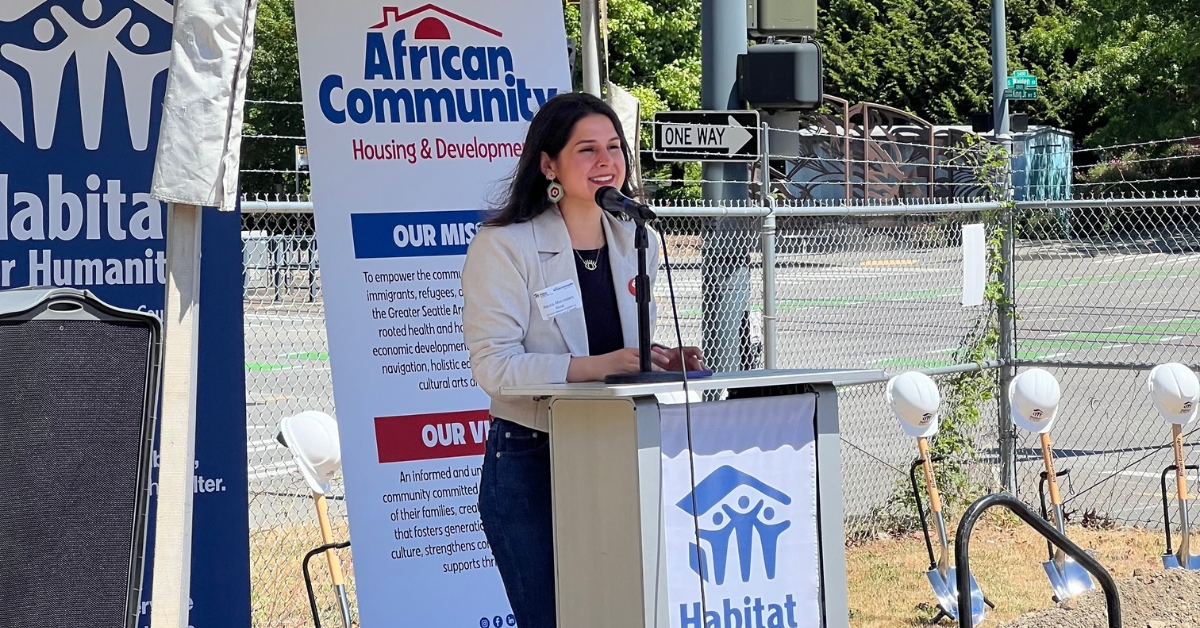
Today, the City Council voted unanimously to approve the ‘Roots to Roofs’ bonus pilot program, also known as Council Bill 121011. The bill, sponsored by Councilmember Alexis Mercedes Rinck (Position 8), supports more community-led affordable housing development by providing a citywide density bonus and an additional height bonus for areas that have historically had racially restrictive covenants.
“The Roots to Roofs pilot program will give our community-led organizations the flexibility they need to expand and jumpstart projects to meet our ever-growing affordable housing need. We know Seattle has an affordable housing shortage, and we must add another tool to the toolbox. This pilot program does just that!” said Councilmember Rinck, who serves on the Land Use Committee. “I would be remiss if I didn’t give a huge thanks to former Councilmember Tammy Morales for her years of work on this bill. This legislation has improved significantly over the years, and I am proud of the bill we have passed.”
Background
Seattle is in a housing crisis. The current housing shortage is driving up the cost of rent, and displacing communities of color and working families across our city. As the city works to build more housing, it also seeks to empower community-based organizations serving those at risk of displacement with the tools to build housing. Roots to Roofs allows community-based organizations to partner with a housing developer and receive a height and density bonus. The result is a cost-neutral pathway to new community-led affordable housing across the city.
This legislation is the culmination of years of work done by stakeholders, including affordable housing providers, community-led non-profits, housing advocates, and more. Last year, former Councilmember Morales brought forward the Connected Communities bill, which ultimately failed to pass. Roots to Roofs builds on the positive aspects of that legislation while making substantive changes to ensure community needs are met.
Additional quotes
“As Seattle became less affordable over the years, our diverse communities in District 2 were squeezed the hardest. The Roots to Roofs pilot program endeavors to create a more equitable city, and counteract displacement pressures by cutting red tape that gets in the way of affordable housing production and the development of community resources.”
– Councilmember Mark Solomon (District 2), Land Use Committee Chair
“The Roots to Roofs pilot will play an important role in helping communities, families, and individuals remain anchored in place. Many thanks to CM Rinck and everyone who spent years on this effort; the organizations, communities, and individuals. Seattle will overcome our housing crisis, and it will take many different approaches and methods. Thank you to the Council for willing to use the Roots to Roofs pilot as one of those methods.”
– Slayman Appadolo, Cham Refugees
“I support the Roots to Roofs legislation because the proposed land use density bonuses and allowance for profit/non-profit partnerships are a tool to help produce more affordable homes. Thank you for your yes vote on this legislation.”
– Donald King, Nehemiah Initiative
“Roots to Roofs is the kind of pilot legislation that Community Based Organizations have long been seeking. They will now be able to serve the urgent needs of their community and step up like they have always wanted to, by building affordable housing and community centers without overly burdensome regulation. CBOs have been advocating for this change for years and it’s finally here!”
– Leah Martin, Allied8
“The Housing Development Consortium applauds the passage of the Roots to Roofs pilot program. Seattle faces a critical housing shortage, and increasing the supply of affordable homes requires removing the barriers that hinder development. Roots to Roofs empowers nonprofit and public developers; mission-driven organizations with deep community ties and a long-term commitment to serving low-income families and individuals by giving them the flexibility needed to maximize development sites and turn planned affordable homes into a reality.”
– Patience Malaba, Housing Development Consortium
Next steps
The bill now moves to the mayor’s office for consideration and possible signature.
# # #